Thursday, May 23, 2013

Jess Curtis: Performance experiment

Jörg Müller (left) and Jess Curtis in
"Performance Research Experiment #2:
Paradox of the Heart (Phase 1)." Photo: Sven Hugolani
Jess Curtis: Performance experiment:

Jess Curtis wants to know what's going on inside you. Literally.

In his latest "Performance Research Experiment #2: Paradox of the Heart (Phase 1)," which debuts at CounterPulse this weekend, Curtis and collaborator Jorg Muller team up with multimedia artist Yoann Trellu, dramaturge Mira Moschalski and neuroscientist Ida Momennejad for an evening-long event that is part performance and part scientific experiment.

It began with Curtis' 2003 "Performance Research Experiment #1," which CounterPulse presented in 2006. In that piece, Curtis and Muller based the length of each dance segment on the audience's reactions - when five watchers shouted out that they were bored, they would move on to another scene.

"It was an interesting survey," says Curtis of the piece, which his 13-year-old company Gravity has since performed throughout Europe. "I had the fantasy of controlling it and doing it in a much more systematic way where we might be able to capture data about attention spans in different performances, but we never really got that far with that."

Curtis, who has taught at UC Berkeley and is pursuing a doctorate in performance studies at UC Davis, notes that this second "Performance Research Experiment" is a somewhat different animal.

"I wanted to do something that pushed the science side a little farther," he says. "Always my work has a research base to it. I'm curious about questions like how does this kind of image affect an audience, or how do I bring together images that provoke certain kinds of conversations? How does a performance affect how we see things?"

Feedback from the audience this time comes in the shape of devices that will monitor the heart rates and skin conductivity of 10 performance viewers. Trellu will then take that digital information and play it out on screens in real time as the performance progresses.

Curtis - whose highly charged and yet often playful pieces blend theater, movement and aerial work - goes on to reference German author Erika Fischer-Lichte's writings on the transformative power of performance.

"She moves the discussion of performance away from 'What does it mean and how do you read it?' and asks, 'What is its impact on the world and how does it do that?' " he says. "Does watching a dance or performance have physical consequences on your body? These are all questions that are very interesting to me."

Thursday, May 16, 2013

Anata Project Spring Season: Revealing

Photo: Claudia Hubiak
Anata Project Spring Season: Revealing:

It's not just secrets that are revealed in Claudia Anata Hubiak's newest work, "The Hush Hush Chronicles," which the 2-year old Anata Project premieres Friday at Z Space, on a shared program with New York-based Summation Dance Company.

"I am playing with the idea of secrets, of holding information and what that does to us, the pathways it carves in our bodies, the memories it forms and the pressure it causes," says the outgoing Hubiak, a former champion gymnast, who discovered dance when she was 18.

"It was a total switch for me," she says wryly. "I was 17 when I finished doing gymnastics. I was the Colorado state champion, but the older I got and the more I did it, the more terrifying it was for me. The only part that was joyful for me was the dance element, so I kept following that. I decided to study ballet and jazz, and somehow, by magic, I got into the dance department at UC Santa Barbara."

As a rehearsal in SoMa's LEVYstudio gets under way, it's hard not to see the kinesthesia of the competitive athlete in her movement. Hubiak demonstrates a move with a fluid spiral that takes her from the floor onto her feet and back to the floor again in swift, fearless strokes. A trio of dancers interlocks, limb sliding against limb. There's always something moving, she tells the dancers.

"For a long time I think my choreography was very strong and angular and athletic, and I love that element of it," she says, "but over the years I've tried to dissolve and break that down so it's not the dominating factor. Definitely the gymnastics has factored in, but also I grew up in a Buddhist household, so the mindfulness and kinesthetic awareness through meditation has influenced my work a lot."

Nevertheless, it's the darker side of life, the furtive moments hidden in corners of basement speakeasies, that interests Hubiak in "The Hush Hush Chronicles," which will be performed to live music by indie folk group We Became Owls.

And is Hubiak pro-secrets?

"No, I'm not," she says with a self-conscious laugh. "I'm trying to learn how to hold more secrets, actually. Not that I necessarily spill other people's secrets, but I don't hold my own very well. They come out pretty easily."

Thursday, May 9, 2013

Smuin Ballet: Helen Pickett's 'Petal'

Smuin Ballet: Helen Pickett's 'Petal':

"Mostly breathe, do not punch it," instructs choreographer Helen Pickett from the front of Smuin Ballet's studios, "Listen to the music, do not punch it."

Pickett is in San Francisco rehearsing her ballet "Petal" for the company's spring season, which starts a two-week run this weekend at the Yerba Buena Center for the Arts before touring to Mountain View, Walnut Creek and Carmel.

With a wide smile, she admits to a caffeine-fueled energy as she settles back to watch the dancers launch into her high-octane yet sensual choreography. No delicate hothouse blooms here - "Petal" seems instead to be a barely contained riot of wildflowers.

The vivacious dance maker created "Petal" in 2008 for the Aspen/Santa Fe Ballet, and it's been staged for Atlanta Ballet, where she is resident choreographer. The debut with Smuin Ballet represents a homecoming for Pickett, who lived in San Francisco as a teenager and attended Lowell High School while studying at the San Francisco Ballet School.

While there in 1986, the young dancer met William Forsythe, a choreographer whose lasting influence is detectable in her style. She recalls watching him rehearse the company as he created his ballet "New Sleep."

"After a week of me sitting in the doorway like a 5-year old kid - and this is so Bill - he said, 'You've been watching all this time, why don't you come in and try some things?' " says Pickett, who later asked him if she could audition for the Frankfurt Ballet and joined the company at 19.

"It sounds like a fairy tale, but bottom line is that I asked him," she says pragmatically. "You look at people's lives and they seem charmed, but you are responsible for your success. As Louis Pasteur says, fortune favors the prepared mind."

After several years with Frankfurt Ballet, Pickett left dance to work with the Wooster Group theatrical troupe. She pursued acting for several years, while also teaching Forsythe improvisation techniques, when a chance opportunity from Boston Ballet drew her into choreographing in 2006.

Since then, the lively "Petal" has become one of her best-known works. Pickett says it was inspired by the vibrant color and softness of a Gerber daisy.

"All human beings have these senses, and they connect us," says Pickett, who wrote her master's thesis on proprioception, a word that comes up in her rehearsals. "Intimacy is such an important part of a human life - without it, we wither. So how do we break that fourth wall and connect to the audience more than just visually? Let's celebrate this burst of color, this sound, this touch."

Tuesday, May 7, 2013

Balanchine and Beyond review: Diablo Ballet

'Balanchine and Beyond' review:

Short and sweet were the bywords for Diablo Ballet's "Balanchine and Beyond" program, which opened in Walnut Creek on Friday night.

The company has in recent seasons developed a workable template for smaller-scale stagings with an informal "Inside the Dancer's Studio" performance series at the Shadelands Arts Center. The nearly hour-long program is a little more involved than a studio showing, but less grand than a theatrical show. The milieu feels more economical, but also more convivial, and clever lighting by Jack Carpenter lent the proceedings a coolly elegant atmosphere.

The evening got off to a rousing start with Robert Dekkers and Hiromi Yamazaki in the pas de deux from George Balanchine's "Stars and Stripes." Dekkers and Yamazaki offer a clean, unmannered approach to the steps, but also winsome sweetness in the interplay between El Capitan and his Liberty Belle. Dekkers finds a crystal-clear musicality in the John Philip Sousa marches, while Yamazaki's jumps and beats are bright and cheerful.

The best part is that all that is delivered enthusiastically and yet without a trace of irony, which is a credit to the meticulous and thoughtful coaching by Christopher Stowell, who staged the duet along with Artistic Director Lauren Jonas.

The "Beyond" part of the program included "From Another Time," a contemporary premiere from former Diablo Ballet dancer Tina Kay Bohnstedt, set to an original score by East Bay native Justin Levitt, who also accompanied the dancers on piano. Shifting moods, from tender to unsettled, colored the enigmatic relationships between the two women and three men. David Fonnegra and Jennier Friel Dille were particularly absorbing in their duet, while Edward Stegge was nostalgic rather than lonely as an odd man out among couples.

Dekkers returned, this time with Mayo Sugano in a pas de deux from "They've Lost Their Footing," a rumbustious company staple created by KT Nelson in 1999.

"See Saw," the final piece of the evening, was choreographed by Dekkers, his third work for the company. Dekkers revealed that he once played cello and chose as his inspiration the first movement from Felix Mendelssohn's Piano Trio No. 1 in D Minor, performed live by Phyllis Kamrin, Amy Brodo and Ian Scarfe.

"See Saw" is more mature than the name suggests, and Dekkers' style here was formally balletic from the waist down, with wildly angular contemporary shapes and impulses from the waist up. Pleasing patterns mark the arrangements for the four women and three men, although the crowded spacing on the limited Shadelands stage occasionally looked muddy. Rosselyn Ramirez was eye-catching in heartfelt duets and solos that spoke of innocence and yearning in a succinct and compact work that never outstayed its welcome.

Friday, May 3, 2013

Company C leaps boldly into spring works

Dennis Nahat's "Ontogeny." Photo: Kathryn Rummel 
Company C leaps boldly into spring works:

The dancers of Charles Anderson's Company C have an appealing, gutsy way about them, and whether the choreography is lightweight or more serious-minded, the dancing onstage was audacious during the opening of the company's spring program on Thursday at San Francisco's Z Space.

There was plenty of opportunity to show off nervy attack in Dennis Nahat's "Ontogeny," made for the Royal Swedish Ballet in 1970. A constantly shifting and evolving biology unfolds in four movements, set to the frenetic music of Karel Husa. The nine dancers look responsive and alert as they fly through the air in startling lifts and twine limbs into pretzels evoking primordial organisms that meld and test each other in duets and small knotty trios.

Jacqueline McConnell, supported and manipulated by Bobby Briscoe, Connolly Strombeck and Calvin Thomas Jr., was attractively brash, if less refined in the opening movements. Later sections led by Tian Tan, with Edilsa Armendariz, Chantelle Pianetta, Daniella Zlatarev and David Van Ligon, were more subdued and sculptural.

A scientific flavor tinged the evening, which opened with Carl Flink and John Bohannon's "A Modest Proposal." If this amusing novelty piece - with narrator Ryan Drummond in headset microphone delivering an engaging monologue as the dancers organized themselves illustratively behind him - felt like a TED talk, probably because that's exactly how Drummond conceived it in 2011.

The affable Bohannon's modest proposal asks why not replace the ubiquitous PowerPoint presentation with dancers demonstrating complex scientific concepts - an idea he's promoted with a Dance Your Ph.D. competition.

"A Modest Proposal" is certainly entertaining, but one can't help noticing a few things. First, despite the elegant visual representation, did anyone actually learn and retain what he said about lasers and the production of slow light or the biology of proteins in moving cell walls? Second, rather than feeling like equal conversant partners to a scientist, here the dancers look like voiceless equipment. They form artistic photons or collapsing proteins, convenient "furniture" for Drummond to sit on or amusing transport drones to move him from place to place during his monologue. But where is the part where science learns from dance? Let's take this intriguing idea and push it further.

The other premiere of the program was Van Ligon's "Natoma," set to music by Zoe Keating. There are some inventive ideas in this more formally ballet work, led by Strombeck and Armendariz, although the connective tissue between such moments was less compelling, and crisper and more distinct execution would have helped focus matters.

Then too, choreographic intention was sometimes indistinguishable from happy accident. A trio of women each placed a foot delicately in front of the other on pointe and rock back and forth gently - but was the rocking purposeful, or only the quivering result of a loss of balance?

Also on the program was director Anderson's hyperbolic "Bolero," as well as his duet "For Your Eyes Only" - a last-minute addition to the program, which he says was created for a performance for the hearing impaired. Danced in silence, the duet for Pianetta and Briscoe had greater focus and impact than did the exaggerated "Bolero."

Thursday, May 2, 2013

'Scooby-Doo Live! Musical Mysteries'

Photo: Kelly Phillips

On Sunday, the answer to the famous question "Scooby-Doo, where are you?" will be "at the Paramount Theatre in Oakland," where fans young and old can see a live musical version of the enormously popular cartoon.

It's been 44 years since the lovable dog with the penchant for mysteries - and his teenage pals Shaggy, Fred, Daphne and Velma - piled into the Mystery Machine and chugged onto televisions in Hanna-Barbera's family-friendly TV show. With reruns capturing new audiences hungry for Scooby snacks, the Australian creative team of writer and director Theresa Borg, composer Craig Bryant and choreographer Katie Ditchburn deemed this the right moment to launch "Scooby-Doo Live! Musical Mysteries," a live children's musical that has been enjoying success in Australia for two years.

"The old episodes still have a huge appeal across generations, and now there are new films and new series," says Borg, of Melbourne, in a phone conversation. "We thought it was perfect, it's such a fabulous family brand and one that the whole family - grandparents, parents, kids - can enjoy."

She continues: "I love the teenagers. They're such nice, wholesome characters, you'd be proud to have those kids in your family. I have three children, and I'd have no objections to them having friendships with the kids in that gang. The girls are great role models - they're straightforward and intelligent."

Borg calls "Scooby Doo Live!" a bite-size tribute to American musical theater, a kids' show that takes the music from the popular television cartoon and gives it a '60s jukebox slant. Children's theater has become a specialty for Borg, who produced the show with her husband, Anton Berezin, through their company, Life Like Touring.

Wherever the tour takes the show, she explains, they take advantage of the local setting. For Sunday's performance, for instance, the ghost-tracking mystery at the heart of the musical will actually be set in the Paramount and take advantage of the surroundings to introduce kids to a little old-time theater and vaudeville as well.

And about that endearing dog? Borg says, just as in the cartoon, Scooby always winds up front and center, even singing and dancing.

"That's who the kids come to see," she says. "People will recognize enjoy seeing all the things about TV show they know and love, plus this show is very interactive. We invite children to help solve the mystery along with the gang and keep busy looking out for the ghost. They scream when they see it and let Scooby and his friends know."

"He's got a special place in many people's hearts," she adds.

Hope Mohr Dance: 'Failure of the Sign'

Katharine Hawthorne, Tegan Schwab, Roche Janken of
Hope Mohr Dance in Hope Mohr's
"Failure of the Sign is the Sign." Photo: Margo Moritz.
Hope Mohr Dance: 'Failure of the Sign':

A fascination with the relationship between language and movement was the springboard for Hope Mohr's latest dance work, "Failure of the Sign Is the Sign," which debuts at ODC Theater this weekend on a program that the 6-year-old Hope Mohr Dance company will share with New York-based choreographer Susan Rethorst.

"I've always been interested in brain and body in conversation or in antagonism," says Mohr, who is an artist-in-residence at ODC Theater. "I'm a dancer, but I'm also a writer. My experience of being a writer and of language is very cerebral, and my experience of being a dancer is very somatic; so I was interested in how those two things collide. For this piece, I wanted to focus on the moment when we learn to speak, which often happens around the age of 1, and investigate that experience of funneling sensation into speech as an archetypal transition into selfhood, a laying down of the foundation for who we are."

Mohr, who has two young children, was attracted by the notion that the moment of learning to speak might also represent a separation from one's mother, the start of a journey into individuality with the inevitable sense of loss that arises from that. Thus, improvisation with "sounding" is where she began her process, she says.

"I don't know if I've ever seen a piece with dancers talking where it worked for me," she says matter-of-factly, "So in this, the dancers aren't really singing or speaking, but rather sounding consonants, vowels, getting at the sound of a kinetic experience. We were trying to link the voice to physical experience from a purely sensing place, that is, not going through the cerebral."

In addition to a soundscape composed by musician Caroline Shaw, Mohr's choreography will get a visceral and visual jolt from artist Katrina Rodabaugh's outsize soft sculptures, which resemble giant internal organs - heart, lungs, intestines - and which are strewn throughout the space.

"For me, it felt related to the idea of motherhood," Mohr says, "and to the investigation into an internal emotional landscape. Our relationships to our mothers is a template for intimacy that has reverberations in our lives as adults. So the work has become a lot about the search for connection, and how that might be ruptured in that moment of learning to speak."

"It's my hope that this piece will offer vivid, compelling imagery that resonates with your own emotional territory. It's a very personal piece," says Mohr.

Thursday, April 11, 2013

CubaCaribe Festival of Dance and Music

Teatro de la Danza del Caribe, Photo: Jamaica Itule Simmons
CubaCaribe Festival of Dance and Music:

The inspiration of teachers is very much on Ramón Ramos Alayo's mind as he and his eponymous company get ready to host the ninth annual CubaCaribe Festival of Dance and Music, which kicks off this weekend at Dance Mission.

The three-week festival, he says, was designed as a celebration of Caribbean dance, music and culture with the first weekend highlighting local dance groups including the Afro-Cuban Arenas Dance Company, the all-female Las Que Son Son and the Brazilian-inspired Sambaxe.

Then on April 19, one of Cuba's most highly regarded modern dance companies, Teatro de la Danza del Caribe, will make its U.S. debut at the Forum at the Yerba Buena Center for the Arts. The festival culminates in a third weekend of joint performances at Laney College in Oakland featuring the Cuban company and Alayo's own Alayo Dance Company in works that he choreographed for both troupes.

There are two big modern dance troupes in Cuba, Alayo says, observing that the national modern dance company in Havana shows more international influences, while the 25-year-old Danza del Caribe, based in Santiago, retains more of a distinctive blend of native Cuban folkloric culture.

"Cuban modern technique is based in (Martha) Graham, (Jose) Limón and (Merce) Cunningham mixed with Afro-Cuban," he says. "With the Santiago company, you really see the undulating movement and the folklore mixed into it."

Among the works on the second week's one-night-only program are Danza del Caribe signature pieces like "Sulkari" by Eduardo Rivero-Walker, who Alayo regards as one of the most renowned choreographers in Cuba, as well as his mentor and teacher.

It's a bittersweet moment for the Cuban-born Alayo, who was a principal dancer with Danza del Caribe in the 1990s and who wanted to bring Rivero to American audiences for years, he says, but Rivero died from lung cancer in November.

"He was one of the smartest persons I know," Alayo says. "Tough as a teacher, but good. If you didn't know how to dance, and you danced with him, after you finish you could do whatever you wanted because he could take you where you want to go. He had the vision to see what you could do.

"The way I move is because of him. How I use my arms? Because of him. The way I teach and choreograph is the way I saw him do it. For me he was a model."

Friday, March 22, 2013

Shen Wei Dance Arts review: 'Cube' moves

Photo: Zoe Liu
Shen Wei Dance Arts review: 'Cube' moves

Chinese-born choreographer Shen Wei is known for both vast spectacle, including the Opening Ceremony of the 2008 Beijing Olympics, and quiet, introspective works. His "Undivided Divided," which had its West Coast premiere at the Yerba Buena Center for the Arts Forum on Thursday night, has intriguing elements of both, yet it sometimes felt remote.

There's no sitting throughout the 35-minute piece, which is part installation, part performance art. Instead the audience wanders through a six-by-six grid of 36 squares - some simple panels on the floor and others occupied by clear plastic cubes, or large frames filled with elastic cords or strange hairy stuff. Eighteen men and women, all supine on individual panels and clad only in nude-colored briefs, begin shifting as an original sound score by So Percussion fills the air.

Though the movement is sometimes muscular and tense and other times wildly impulsive, each dancer nevertheless remains tightly contained within the "cube" of space, rarely breaking the plane between us and them. Midway through the piece, the dancers cross over to other squares, where they reel and writhe in small splashes of bright paint, smearing color over themselves, the panels, the textured fluff, the plastic walls of structures that look like greenhouses. One man tangles his limbs in the web of elastic cords that stretch across a frame, while another climbs to a precarious perch atop stacks of plastic cubes.

If the dancers are confined to the positive space, the audience moves through the darkness of the negative space freely as they dance.

The initial reaction is how appealing and slightly voyeuristic it feels to walk among such beautiful bodies. The close quarters allows you to examine their remarkably confident dancing in detail, to study the tension of muscles and the fragility of balances.

When all the dancers stop in a sculptural contrapposto pose with one arm raised, a glance around the room reveals that we are suddenly amid a forest of elegant branches. Standing among the performers in these moments of synchronicity, a powerful current of focused artistic consonance runs throughout the crowd.

It's intriguing too to consider the watchers as part of the performance. Which observers hang to the periphery and who prefers to walk among the squares? The audience itself moves in interesting, unchoreographed ways as viewers try simultaneously to avoid touching each other and keep from falling into the paint-covered squares. And the performers are close, sometimes closer than you realize. At any given moment you might be watching someone on one panel and turn to find yourself unnervingly close to another dancer behind you.

Yet despite the intimacy of these close quarters, the dancers might look directly at you, but it doesn't feel as if they intend to engage, and there is something clinical about that. "Undivided Divided" is beautiful, enormously striking visually, but doesn't venture further to hit viscerally.

Here we stand, closer than we would ever be in a traditional theatrical presentation, and yet instead of evoking a kind of immediacy and passion, there is cool detachment as each of us meanders on our own.

Thursday, March 21, 2013

Point Bonita harbor seal hike for the family

Photo: NatureBridge
Point Bonita harbor seal hike for the family:

Even if it's a little too cold to get in the water these days, you and the kids can enjoy watching the seals frolic in the ocean on a guided hike out to Point Bonita on Saturday afternoon, courtesy of NatureBridge.

The NatureBridge organization was founded more than 40 years ago as the Yosemite National Institutes, with the aim of connecting kids and families to the outdoors. Now partnered with the National Park Service, the group sponsors one or two hikes in the Golden Gate area each month in addition to running a coastal camp during the summer for kids and public education programs throughout the Yosemite area, the Santa Monica Mountains, the Channel Islands and Washington's Olympic National Park.

The family hike starts at 1 p.m. at the NatureBridge facilities at Fort Cronkhite in Sausalito. Amy Blake, the family programs coordinator, says participants will play a "family mingle" game before breaking into smaller hiking groups. Guides will supply each family with a pair of binoculars to use along the 4-mile hike, which will take them along Rodeo Beach and into hills of the Marin Headlands to Point Bonita.

For kids younger than 6, Blake advises bringing a carrier or a trail stroller, as the terrain can be difficult for young children.

Although it's pupping season for elephant seals now, Blake says it's more likely that hikers will see harbor seals on the trip.

"The guides will help everyone spot animals, and then they'll work together do an inquiry activity that helps you learn more about seal behavior," she says.

The hike is a great way to offer kids an introduction to the harbor seal habitat and gives them a chance to use their powers of observation to figure out more about seal behavior.

The hike lasts until about 4 p.m., and afterward the guides will take groups up the road from NatureBridge to the Marine Mammal Center, where they can visit rescued seals, sea lions and other pinnipeds being nursed back to health before they're released into the wild.

The hike is limited to 60 participants, so registering beforehand - at www.naturebridge.org - is a must.

"We're really focused on giving a family the opportunity to get out in nature and connect with the Golden Gate recreation area," Blake says. "It's a chance for families to learn side by side, and what we really love is letting kids see their parents getting excited about learning something new."

Thursday, March 7, 2013

On the Move: An Exploratorium Roadshow

Above the workshop at the old Exploratorium space, there hung a sign that read, "Here is being created the Exploratorium, a community museum dedicated to awareness." While the museum awaits its grand reopening April 17 at San Francisco's Pier 15, it will be taking that spirit of creativity and exploration onto the streets of San Francisco with a mobile museum that launches Sunday at locations in Bayview, the Mission and the Embarcadero...

Read More at: On the Move: An Exploratorium Roadshow

Monday, March 4, 2013

Diablo Ballet review: The Web Ballet

If you follow #diablowebballet on Twitter, you already know that the subject matter, mood and setting of Diablo Ballet's "Flight of the Dodo," which premiered Friday night at the Shadelands Center in Walnut Creek, took its shape from eight tweeted suggestions submitted to the company this year.

It's sometimes hard to believe Twitter gets used for much more than following baseball and checking food truck locations, but the company reports that it received 132 responses, which were culled, then shaped by choreographer and dancer Robert Dekkers into a ballet.

Read more at: Diablo Ballet review: Crowd calls shots

Friday, March 1, 2013

Pointe magazine – How it's Done: Tchaikovsky Pas de Deux

Tchaikovsky Pas de Deux comes and goes like a summer love affair: It’s romantic, adrenaline-filled and all too brief. The bravura showstopper is set to music that Tchaikovsky originally wrote for Swan Lake, but Petipa never used. After learning that the music had been rediscovered in the Bolshoi archives, George Balanchine used it to create a duet on New York City Ballet principals Violette Verdy and Conrad Ludlow in 1960.

The scintillating 40-second female variation is a showcase for precision and a chance for the dancer to demonstrate an effervescent individuality. Verdy notes that Balanchine added certain touches especially for her. “There are witty things in it—little retards, little changes of return,” she says. “He loved my gargouillades. So in the développé-échappé combination, he put in a retard with the développé a la seconde, which meant I had to make the gargouillades quick; they had to be electric.”

Read More: Pointe magazine: How it's done: Tchaikovsky Pas de Deux

Thursday, February 28, 2013

SpectorDance's 'Ocean': Science meets art

It's an apt topic for SpectorDance, whose studios are situated minutes from the beach in Marina, near Monterey. For 15 years, Fran Spector Atkins has worked with multimedia artist William Roden to create work that explores the connections between communities and the sea. The result is "Ocean," a blend of her choreography, a score by Colin Farish, underwater film, and interviews with oceanographers from the Monterey Bay Aquarium Research Institute.

"It's so easy for very critical issues to fall out of the realm of what people think about because we're so involved in our lives and concerns. I wanted to bring the issue of human impact on world oceans into people's consciousness and make it accessible to general audiences," Spector says.

Read More: SpectorDance's 'Ocean': Science meets art

Thursday, February 21, 2013

Chinese New Year Treasure Hunt

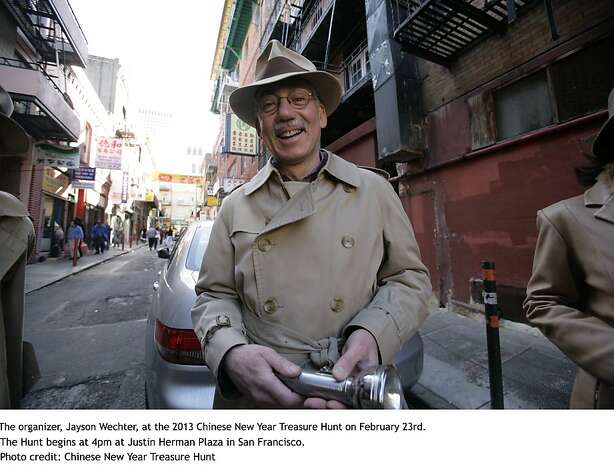
Whether you're a budding Sam Spade or just interested in learning some of the unique history of San Francisco, this year's Chinese New Year Treasure Hunt is a great way to give your legs and brain a workout.

On Saturday, thousands of amateur sleuths will gather at Justin Herman Plaza to pick up clues for a historical scavenger hunt themed around the Year of the Snake. It will take them all over Chinatown, North Beach and Telegraph Hill in search of answers to clues laid down by the creators, San Francisco Treasure Hunts.

Read More: Chinese New Year Treasure Hunt

Wednesday, February 20, 2013

Tanya Bello's Project. B: Dance as play

The serious side of playtime inspired choreographer Tanya Bello's "Games We Play(ed)," which her company Project. B. premieres this weekend on a program at ODC's Dance�Commons.

A familiar face on Bay Area stages - Bello has danced for ODC, as well as for Robert Moses, Janice Garrett and Charles Moulton - she has recruited for her own 3-year-old company a coterie of top-tier dancers, including Katherine Wells and Norma Fong from Robert Moses' Kin, and Kelly del Rosario of Margaret Jenkins Dance Company.

Read More: Tanya Bello's Project. B: Dance as play

Monday, February 18, 2013

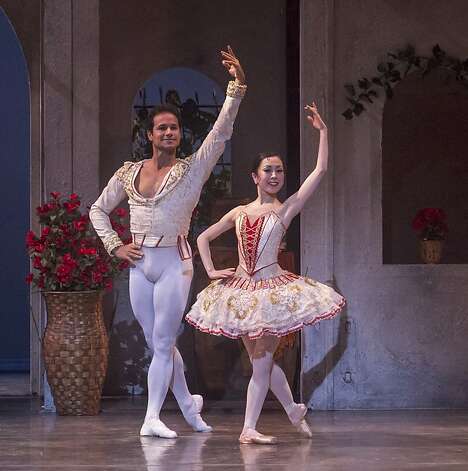
'Don Quixote' at Ballet San Jose - SFGate

Wes Chapman's lively, colorful staging of the classic "Don Quixote" might not break any new ground for this 144-year-old ballet, but the frothy, lighthearted production that Ballet San Jose premiered at the San Jose Center for the Performing Arts on Friday is nonetheless a solid showcase for a company.

The ballet's comic plot, drawn from Cervantes' epic novel, recounts the adventures of the mischievous Kitri, who longs to marry her poor but handsome suitor, Basilio. Over the history of "Don Quixote," so many versions and additions have been made, it's hard to say what the original really looked like, but Chapman, who leads Ballet San Jose as artistic adviser with Raymond Rodriguez, hews closely to what is generally accepted as the traditional Marius Petipa and Alexander Gorsky choreography.

Read More: 'Don Quixote' at Ballet San Jose

Thursday, February 14, 2013

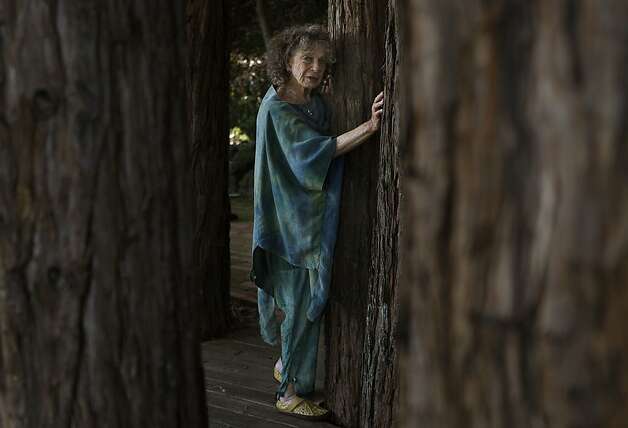
'Parades and Changes': Anna Halprin

There's a ritualistic resonance to the return of Anna Halprin's "Parades and Changes" to the Berkeley Art Museum this weekend. Forty-three years ago, the dance piece marked the opening of BAM, symbolic of then-director Peter Selz's desire to re-engineer how art and audiences came together. Now "Parades and Changes" will mark the museum's closure, as it moves to a new home in downtown Berkeley.

In developing "Parades and Changes," Halprin and composer Morton Subotnick, who also performs this weekend, invented their own method of "scoring" the work. Various activities, the tearing of sheets of paper, dressing and undressing, musical episodes, etc., were set down on a parade of colored index cards, which could then be shuffled or changed depending on which seemed to suit the context of the performance and the culture of the moment. Halprin notes that that flexibility made "Parades and Changes" malleable enough to fit any venue, and also kept it relevant through the years.

Read more: 'Parades and Changes': Anna Halprin

Sunday, February 10, 2013

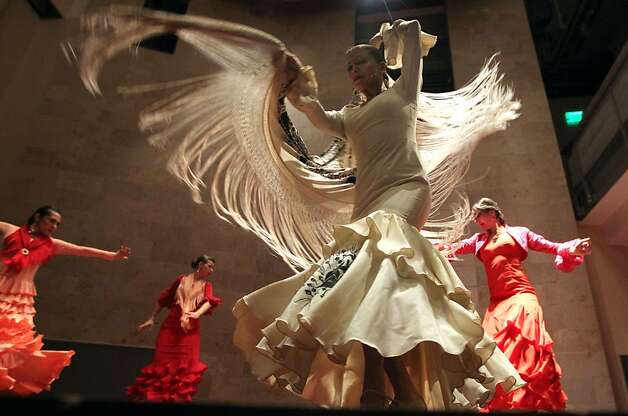
Flamenco, Spanish poet intersect in opera

Spanish poet Federico Garcia Lorca wrote: "I know there is no straight road/ No straight road in this world/ Only a giant labyrinth/ Of intersecting crossroads."

Lives twine and intersect in richly imagined episodes of byzantine complexity in Osvaldo Golijov's opera "Ainadamar," which Opera Parallele, under Nicole Paiement's direction, performs this weekend at the Yerba Buena Center's Lam Research Theater.

Read More: Flamenco, Spanish poet intersect in opera

Thursday, February 7, 2013

'Ivy & Bean, the Musical': Chaotic fun

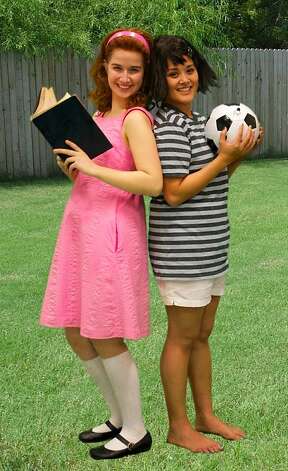
Ivy and Bean didn't start out being the best of friends, author Annie Barrows says. But as with many friendships, the high-spirited Bean, who is always clashing with her sister, and the clever, bookish Ivy, who is practicing to be a witch, discover they have a lot in common on their way to becoming co-conspirators in mischief.

This weekend, the Berkeley writer's dynamic duo come to life onstage when the Bay Area Children's Theatre debuts a musical version of "Ivy & Bean" at Freight & Salvage, kicking off a season that takes the show from Berkeley to San Ramon to Mill Valley.

Read more: 'Ivy & Bean, the Musical': Chaotic fun

Black Choreographers Festival: Tigner

It wasn't a dream - the drums playing a mysterious rhythm that Latanya d. Tigner heard every night in Congo. Still, no one else could hear them it seemed, and so she concluded they must be talking directly to her for a reason.

Those drums and the many experiences Tigner brought back with her from a 2010 visit to the Republic of the Congo inspired her latest choreographic venture, "Ndozi/BaNkaka: Those Who Sit With Us," a collaboration with drummer Kiazi Malonga that features on the second of three weekends of the ninth annual Black Choreographers Festival, which begins on Saturday.

It was on her first night in Brazzaville, Tigner recalls, as she turned into bed, that she heard the drumming.

Read More: Black Choreographers Festival: Tigner 

Tuesday, January 29, 2013

'Nevabawarldapece' review: Robert Moses Kin

There's a beautiful moment in Robert Moses' latest work "Nevabawarldapece" - which had its premiere Friday night at the Lam Research Theater in Yerba Buena Center for the Arts - when the dancers shift from frenetic ricochets and lunges across the stage into an instant of stillness, with a thrust of the solar plexus like the beating of a heart the only movement. In a world of seemingly endless chaos and confrontation, it feels like a plea for a return to core principles.

At the heart of "Nevabawarldapece," the title of which sounds something like "never be a world of peace" if said out loud, is the urgent, pulsing energy contributed by live performances from the spoken-word artist Carl Hancock Rux, folk-"hip-Alachian" singer Laura Love and reggae-blues musician Corey Harris, who are onstage with the 10 dancers of Robert Moses' Kin.

Read more: 'Nevabawarldapece' review: Robert Moses Kin

Friday, January 25, 2013

San Francisco Ballet review: Tantalizing

Like a parade of amuse-bouches, the gala fare that opened the San Francisco Ballet's 80th season at the War Memorial Opera House on Thursday night was just light enough to suit the festive atmosphere and just tantalizing enough to get the mouth watering for the season ahead. Eleven bite-size ballets offered an agreeable mix of romance, sass, introspection, pomp and fireworks.

The oldest piece of the night was August Bournonville's 1858 "Flower Festival at Genzano" pas de deux, which appears so often in galas it's easy to forget how much of its appeal lies in refined style and storytelling. Not so here. The buoyant Gennadi Nedvigin and a cheerfully vivacious Clara Blanco created an utterly delightful aroma of springtime in a pitch-perfect performance. Who else but Nedvigin could turn a precisely placed fifth position after multiple pirouettes into an event worthy of applause?

Read More: San Francisco Ballet review: Tantalizing 

Thursday, January 24, 2013

Bebe Miller's multimedia 'History'

How do you embody the internal life of the choreographic process? Bebe Miller's latest work, "A History," which her company performs this weekend at the Forum at Yerba Buena Center, takes on what drives the creative process and how to capture and document the essence of a work.

Miller says the idea for the project arose out of conversations with Talvin Wilks, her longtime dramaturge, and veteran dancers Angie Hauser and Darrell Jones, who have performed with Bebe Miller Company for more than a decade, about what really drives their work.

Read more: Bebe Miller's multimedia 'History'

Thursday, January 17, 2013

Ethnic Dance Festival's public auditions

This weekend, a world of dance comes to the Yerba Buena Center for the Arts, as hopefuls from ethnic dance troupes across Northern California will audition for the 35th annual San Francisco Ethnic Dance Festival.

"It's a great way to see the wonderful variety of cultures we have in this area," says Carlos Carvajal, co-artistic director of the festival. "Nowhere else can you do an international festival of this range in which all the participants live locally. Usually festivals as diverse as this have to bring people from other countries, but we have Mexico folklorico dancers, Indian dance, Spanish, Middle Eastern, Tibetan - and they're all local artists."

Read more: Ethnic Dance Festival's public auditions